For Loops
tags: #python/documentation/python_loops
Definite Loops Using For
The for loop executes a block of code in succession or iteration for each element in an iterable object or a range of numbers. We can create a for loop using the for keyword:
for loop_var in iterable_obj: #loop_var = iterable_var
	# body of the loop to execute some task
	<statement>
	...
Looping through a range of values:
for i in range(val):
	<statement>
	...
In a while loop, a count variable is explicitly initialized before the loop, and the loop continues to execute as long as a specified condition is true. The count variable is typically updated within the loop body. As a result, the loop may or may not have a fixed number of iterations.
While loops require explicit control over the iteration.
Flow of Execution
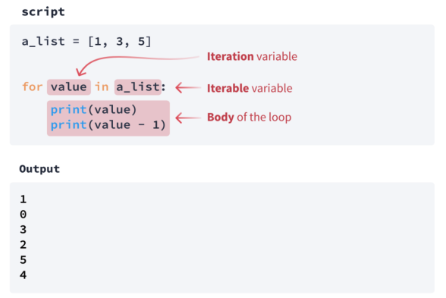
Iteration Variables
The iteration variable takes on the value of each element in the iterable object during each iteration of the loop.
- The iterable variable iterates through an iterable object.
- The body of the code is executed once for each successive item in the iterable object.
- The iteration variable moves through each item in the object and terminates the loop after iterating through the entire object.
Terminating Condition
The terminating condition of the for loop occurs when the program has iterated through each item in an iterable object.